CHRIS HUNTER
0:45
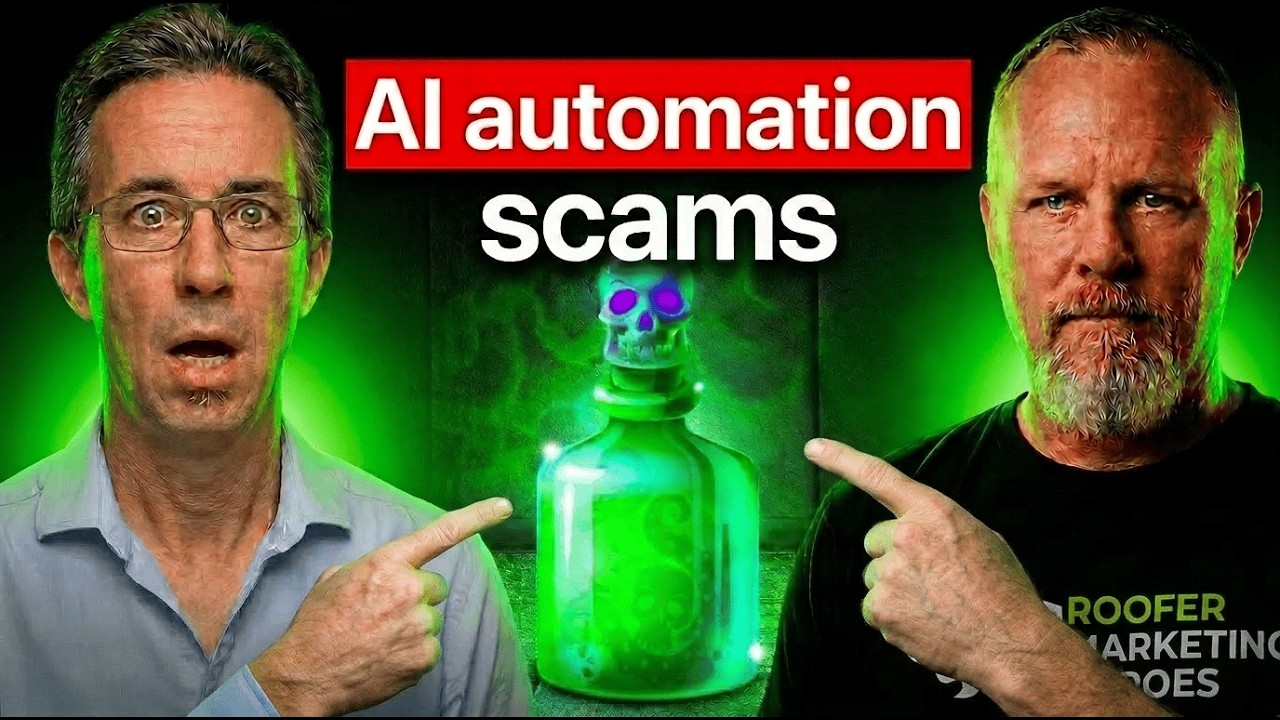
Hey everybody and welcome to the AI Marketing Experts podcast. We are joined here with all of our friends and fellow marketers and AI experts. We’ve got a really cool topic today, right? Something that kind of ran across, you know, radar in the past week. So basically if you’re an SMB owner and you’re getting pitched all the time, you know, small business owner, you’re getting pitched all the time at this point from marketers, but now from AI powered this or that, right? And you’re getting pitched for like a 4 grand a month and all these promises of, of 100% automation and all that kind of stuff. Well, this one is going to be for you, right? We’re going to show you why the FTC just spent six months, six months suing the exact companies pitching you right now. Right. And these are bigger companies, these aren’t small companies here.
CHRIS HUNTER
1:49
And I think that they were making a, a huge point out of this. And we’re going to talk to you about these. We’re going to tell you exactly what to look for when a vendor says, you know, AI powered. Honestly, I say that myself, so it’s, it’s kind of, you know, I’m gonna learn a little bit in this one too. So let’s go ahead and jump right into it. John, you’re, you’re probably the most knowledgeable out of all of us on, on any of these things. What, what, what’s your thoughts on it?
JOHN CLENDENNING
2:19
Well, it’s, it’s interesting because anytime there is a, something new at all, we know that the vast majority, once it becomes in the, the public sphere, the lexicon, whatever we’re thinking about it, we don’t know what it means most people just listen to sound bites, right? So they kind of just have heard, heard, heard. And marketers who are being unethical have always, you know, sold the snake oil right on top of that. And cool with the FTC jumping in and saying, you know, all the way through. No, like, you can’t do that. You can’t say that. Like, think of supplements. Think of, you know, all that, the same factors that make everybody supplement you and that kind of thing as well. So really got to kind of understand that what you don’t know as, as a business owner, even if a digital marketing agency owner, what you don’t know about the topic is a threat and a weakness.
JOHN CLENDENNING
3:16
Right? So you do got to, you got to understand enough to, to be able to ask the right questions, confirm what’s going on. What ultimately what it comes down to is there’s really only a couple power players in the world of AI. We know that OpenAI runs ChatGPT, anthropic runs. Claude, you’ve got some of your deep seats and stuff like that in China. Quinn is a model from Alibaba and stuff like that. But there’s these large companies that run the AI models. Everybody else. Do they really have a proprietary system? Are they really offering this? Yeah, set it and Forget it.
JOHN CLENDENNING
3:56
Run 247 deep customer triage and in, you know, like listening to every one of your calls and able to dial in a better market and all of this. Are they really doing that or did they write a really good prompt? We told you about six months ago in an episode, that’s what you’ve got to figure out is where is it? Which is, it’s just somebody with a good prompt and charging you $4,000 and you could have got on our show for free or joined the Amy Insider community in the back end and learn for free. Or is it really, is it really the next level business intel that you need? So that’s kind of it in a wrapper is, is. And we’ll get into a couple of these cases in a minute, but yeah. Anybody else? Two cents on where we’re at.
JENNIFER CREGO
4:36
If it is that intel, be cautious about that because that was one of the things. A couple weeks ago, the FTC settled with Cox Media Group and two other marketing firms settled with them for I think over $900,000. It was the settlement because they sold a service called Active Listen, where they were saying that the this, their AI powered tool, listens to consumers through their phones and then serves those consumers local ads when they’re ready to buy. So the. The FTC said the. The service did no such thing. And so because of that, they’re. They like these.
JENNIFER CREGO
5:31
These companies, you know, these few. The settlement is quite large because of that.
JOHN CLENDENNING
5:39
And so almost a billion dollars. Like that’s.
JENNIFER CREGO
5:41
Yeah, like that is snake oil as. Yeah, yeah.
JOHN CLENDENNING
5:50
But that taps into everybody’s thought in their head, oh, they, they hear me on my phone as soon as I. Like we all have said that, right? And they’ve always said, no, that. That’s not true. We don’t sell that data. We don’t do it. And at the very least, if Facebook is doing it on the back end on their own Facebook platform, and Mark Zuckerberg does put a piece of tape over his laptop. If you ever see him in an interview and his laptop’s in the picture, he does have a piece of tape over the. The camera.
JOHN CLENDENNING
6:18
So what does Mark know that we don’t anyways. But he owns the platform. If they’re serving up at. Again, not supposed to. Totally legal. If it ever comes out, they are shut down, split apart. And because it’s actually physically against the law, Cox Media doesn’t own Facebook. Cox Media doesn’t own Google.
JOHN CLENDENNING
6:35
They’re not. That data is not out there to be bought in real. And if it’s on the black market, why would a company like Cox Media do it more? 9 times out of 10, 99 times out 100, they’re just lying to tap into a story that already exists. That we all think it happens. Oh, we’re going to do that for you. Which makes agencies like ours even harder to actually do the real work at the real price to do the real marketing. Because these guys say, oh, well, and we’ll sell it to you for like 200 bucks a month. And it’s.
JOHN CLENDENNING
7:03
It’s snake oil.
JENNIFER CREGO
7:04
Yeah. Or we’ll get you this.
LAURA SUTHERLY
7:06
Over $19 million that they took from small businesses. And obviously these are companies that we are all familiar with. And so it is all this that we’re mentioning today is online. You can go and read it for yourselves, that it’s legit. That they were putting, as we were saying, snake oil out there, thinking that these small businesses will be able to get ahead by using this special listening
BRAD KILGORE
7:32
that they had, I think, too, John mentioned. You know, whenever there’s kind of a new trend, all of us have been in the Internet marketing space for decades. Whenever there’s a new trend, something exciting, something that they can monetize, it’s like everywhere you turn, you’re going to Start getting all these emails, all these phone calls, all these things on social media because everybody’s jumping on the bandwagon of AI powered and I’ve got the solution and this is the system and there are legit systems out there and we’re all part of some of those. But there’s just so much that we see and have seen for years when there’s something new. I remember when TikTok first started, you know, everybody and their brother that had me on their email list was sending me these emails of buy my software, buy my system, buy this. It’s everything and it’s going to supercharge what you’re doing. And so this isn’t new. Just be cautious of what you’re looking at because there’s a lot of hype out there and a lot of it’s not true 100%.
JOHN CLENDENNING
8:40
And Air AI was another one. Pass it over to Chris. But Air AI was sort of like they’re just promising the whole conversational AI. So they’re just a small marketing company that built $19 million in a very short period of time and got a judgment settlement for $18 million monetary judgment and $50,000 consumer relief plan to the three owners, which are digital marketing agency owners of some sort. Like not, not niche guys like us not working. But in, in that world they, you know, they jumped into some sort of, you know, founder program, set up their business, ran this whole thing. And it was that whole pitch that we hear every single day, our conversational AI will replace your employees. Here’s all our stats turned out.
JOHN CLENDENNING
9:18
None of their stats were true. And that’s what the FTC is here for. But you better be asking these questions. Prove it. Show me. Can I, you know, can I call some people that are using the software? Can you, can you show me what you’re. What, what technology using things like that. Like there’s.
JOHN CLENDENNING
9:33
Do some due diligence. But we like again Chris, conversational AI like hope, right? Like there’s a real, there’s a real use case for this. But we’re not also saying you can replace all your staff and we’re not also saying that it just, it just like it, you know, it solves all your business problems.
CHRIS HUNTER
9:51
100. I mean and, and really it’s, it comes down to the claims versus what is actually reality, right? And the, the other case, right, with Growth Cave, never even heard of them, but they were selling a product called Growthbox and claiming that it would automate nearly 100% of business operations. Right? But when it came down to it, when the FTC looked into it, again, same exact thing, it didn’t actually happen.
LAURA SUTHERLY
10:21
Right.
CHRIS HUNTER
10:22
It wasn’t the truth of what was the reality of what was actually happening. So I think that as we all progress and we’ve got a couple of different sides of this, you know, we’ve got us as agency owners that are trying to incorporate AI into our, our operations and then possibly to sell these, you know, to customers, our clients. How do we navigate this water without having this hype?
BRAD KILGORE
10:52
Right?
CHRIS HUNTER
10:52
And that’s really, I think what all of this comes down to is, is the hype. And I’ve always personally tried to stay away from hypy, you know, type stuff. But at the same time, I also see personally and have talked with clients that, that the next 12 to 18 months are going to be hugely transformative with any small business out there. And I don’t care who you are, you’ve got to be looking into it, but you’ve got to look and be able to find that snake oil, right? And it’s us marketers, right? We’ve, we’ve been told that for, I mean, I’ve been in the game for over 20 years. Most people think that marketing agencies are selling snake oil to begin with. So you layer in AI hype on top of it is just craziness, I think, you know, so for the listener,
JOHN CLENDENNING
11:41
how do we determine that we’re not like him? It’s been a year now. We’re coming up to a year’s, you know, 52 episodes or whatever we’re at. And, you know, don’t we talk about the same thing, right? That we’re saying, hey, well, we’re showing you how to do some of these stuff and help your business along this way. What is different between a $20 chat subscription and US versus a, you know, a $20 chat subscription that they’re paying for you on one of these other platforms and charging you four or five thousand dollars a month for. What is that difference?
LAURA SUTHERLY
12:16
A lot of the difference is experience. And so it’s. I mean, there’s a great example out there that they say, you know, if somebody purchases a professional camera, if you are a professional photographer, those photos are drastically different than if I would go and buy that camera and attempt to use it at that. There’s a steep learning curve and everything. So this is textbook wrapper case, you know, as to if they are trying to sell you something that’s supposed to move you that much further, find out, you know, about the experience, because that will make A big difference. And then two, find out what, what is that core product like we talk about here of is ChatGPT or is Cloud or is Perplexity that you know, they should be able to tell you what it’s built on and not that it’s all intellectual, you know, property that they cannot share and be specific with because that’s when you can start questioning because somebody can find AI and say, oh, I’m going to start selling it at this level. But if that experience or again we always say the human knowledge that the human interaction, that makes a huge difference.
JOHN CLENDENNING
13:24
Yeah, a little story as well on that. Sorry. So the other one would be you want to ask can I see how you built this? Right. And this is a real world story. So anybody can scan your website and call it a chatbot, right? Oh, I trained the chatbot on your website. As a marketer, you know that sometimes there’s things on your website like for SEO reasons and AI recommendations where your blog posts and stuff like that they should be as honest and legit and stuff like that. But as a marketer we don’t always get all the information from the client. So the website might not be the best source of truth completely for 1, 1 point.
JOHN CLENDENNING
14:00
So you want to make sure it’s done well and also how the how to train a real human in a call center, which I have done. I have manuals sitting over there that are 3, 400 pages long. I’ve been flown into call centers of franchise networks decades ago and to the. And I’ve trained my team and when I build a AI receptionist at all, it is fully trained on the humanics, the mechanics, the empathy of an actual real person dealing with a grumpy person dealing with plus the company plus how would you treat Train Nancy. Right, Right. So when somebody asked me to see it, it’s not like, oh, can I have all your stuff? No, that’s my intellectual property. But if you sign this NDA and I’ve had that happen. Alex, if you’re listening, you’re welcome.
JOHN CLENDENNING
14:50
I’m glad we walked you through it. You saw the 400 page manual I used to train your app, do your chatbot. You saw, we walked through and you went, you went, holy bleep. Thank you. I guess I can’t do it myself. Yours. And that was it. It was.
JOHN CLENDENNING
15:05
He just wanted proof. If you’ve got a vendor that’s not willing to show you proof, even if you have to sign an NDA, it’s not. Doesn’t mean they have to give it to you. You didn’t buy the intellectual property, the, the tens, hundreds of thousands of dollars. I, I learned the subject matter trained on it to put it in the back end. That’s mine. But I’ll show you how deep it goes and if they’re not willing to do that snake oil.
CHRIS HUNTER
15:26
Well, and I think even just like what models are you using? Right. I mean we were talking about this on. We, we’ve talked about this several times, right? On what models that, that we use. Like and, and I want to anchor
BRAD KILGORE
15:41
all,
CHRIS HUNTER
15:43
you know, just saying that we use all of these tools, right. We use here with all of our agencies. We ourselves and, and Amy, we work with chat GPT, we work with Claude, we work with all of those models. Right. But if someone has built something proprietary and not willing to tell you what models that they are using and what I’m talking about LLM models at this point, then there might be be, you know, little reservation that, that you’re using because I ran into this personally, I was using you know, some Chinese models in initially on building things right. Because they’re cheaper. The problem is that when I start thinking about okay, well if my clients were in this tool that I’m building and I’m using as the back end the, the AI part of it on Chinese models, how would they react to that? Right? So everything, honestly, everything that we do nowadays for our agency 100 is either chat GPT, right. Or clot anthropic models.
JOHN CLENDENNING
16:54
Okay, look at the whole Tick tock thing, right? That, that’s, that’s, that’s just the public narrative, the whole tick tock thing. We’re going to ban Tick tock unless you have an entirely separate one that isn’t Chinese infrastructure model. That’s the narrative as well. So even if it’s whether you, whichever side of that camp you land on doesn’t really matter to be right. Your, your marketing company should probably be avoiding that or at least being straight up and telling you why they’re using it.
BRAD KILGORE
17:20
Yeah. Continue to change.
CHRIS HUNTER
17:23
That’s true.
JENNIFER CREGO
17:24
Y. Isn’t it interesting too the way that you know a lot of the situation that we’re in with AI, how things have changed because years ago if someone, I mean years ago, even though we didn’t have AI at that point, but if a client had said something to me about like I want to know what your exact prompt is, I would have said that’s proprietary. I’m not sharing that with you. I’d share like happy to share the model. Happy to share Certain things, but like the prompt itself, like no, I would not have done that. And I don’t know that I would have thought about an NDA or, or I potentially even trusted someone at that point. I don’t know. Like.
JENNIFER CREGO
18:10
Yeah, but isn’t it interesting how now we’re saying that like actually that might be something that, you know, agencies. Hey, if you’re those of you who are listening, that is potentially something that we might need to be doing these days that you know, it’s different, it’s different now.
CHRIS HUNTER
18:31
Yeah, yeah.
JENNIFER CREGO
18:33
Sorry Brad, what were you gonna.
CHRIS HUNTER
18:38
So we’ve got a couple of questions that you can answer ask to anyone that’s trying to pitch you AI Snake oil at this point. Right. So what specific models are you using? Okay, what’s the prompt? Right, and that’s what you’re kind of talking about there. What’s the, what’s another one that we can, we can add to it?
JOHN CLENDENNING
19:00
Yeah. Being proprietary. What is really unique about what you did? That goes right to what Jen just said. Right. It’s sort of like is it, is it the, is it your, you know, again you’re being a smarty pants and you wrote a really good prompt and you don’t want to share that with anybody or, or is it, you know, and trust truthfully. So you say like I’ll show you everything but the actual way I built this is the unique piece. Right. So I don’t have to show you that.
JOHN CLENDENNING
19:25
But again, is it, is that worth $4,000 a month? That’s up to the business owner. Can you do make that value justification? But what is it if I just quit your service and went with a $20 a month chatgpt plan and figured out how to prompt, could I replace you? Yes or no? That might be the way to ask that question. Right. Can you be honest on that?
CHRIS HUNTER
19:45
Right. Absolutely.
JENNIFER CREGO
19:47
Yeah.
LAURA SUTHERLY
19:49
Well, and I think also the upkeep, you know, that’s the thing too is if they’ve uniquely, they’ve built something very unique, if they’re claiming this is something solely only us can ever offer you, then I would be asking them what will be the upkeep of it? Because I think there’s true concern as to these pop up companies disappearing. So you know, and then also are they going to only build it once and then just kind of set it and rely on people being paying. What are they going to do? Because again, that’s another reason why we are using the models that we’re using because we know that there is constant instant updates. We See that, that’s the reason why we’re talking about it every week too.
JOHN CLENDENNING
20:37
And that’s also the. Oh, so we’ve got clients. We’ve got one client right now, he’s been in business for decades and we had to go claim his URL back from the vendor that got it for him, claim his Google Maps listing. We literally had to send a lawyer a letter saying you’re stealing the person’s brand because they were trying to be all like no, you can’t take the stuff is, is, you know, everything. Ad accounts and like all of it. So who owns the data? Like again, these pop up companies, as you say, if you’ve got this whole system and it’s listening to all your clients, it’s gone in through all your bookkeeping, whatever this whole agentic system is or the one thing it’s dealing with. Like I would trust QuickBooks or Xero to be around for a while, but I might not trust, you know, Jimmy Bob’s accounting software to be around for a while and have all my data.
BRAD KILGORE
21:23
Right?
LAURA SUTHERLY
21:23
Yeah, I think here in Everybody’s gonna overcorrect. So in about six months everybody’s gonna like start looking and saying is all AI marketing scams. And that’s not going to be correct in any case. It is going to be a tool that we’re all going to have in our toolbox and we’re able to help our clients that much more using AI. It’s just those price tags. But those are what could be the scam. So if you feel like you’re paying too much, ask. Because again, back to my photographer example.
LAURA SUTHERLY
21:56
There are reasons that you want that professional photographer or why you would have it for a wedding or special event. But question what you’re getting with those price tags.
JENNIFER CREGO
22:06
Yeah, and sorry, not just the price tags though, but like can they. Is what they’re promising they’re delivering? Like is it actually possible that that is absolutely. That ftc, you know, with, with Cox Communications, like what Cox Communications was saying they could deliver was not even possible. So like what is it that they’re promising?
LAURA SUTHERLY
22:32
Absolutely, that’s a great point.
BRAD KILGORE
22:35
Sometimes. Go ahead, Chris.
CHRIS HUNTER
22:37
No, go ahead, go ahead.
BRAD KILGORE
22:39
I was real brief. I was just gonna say sometimes what I’ve seen lately is some, some heavy hitter type businesses out there are promising big things for big money and not just lower price, but big money. And some of what I’m seeing is they’re kind of falling down on the job. They’re really not delivering what they promised.
JOHN CLENDENNING
23:01
I’m not going to name the software. But in my industry there’s a prominent one that got bought out by venture capital a few years ago and they’re AI everything they’ve got AI in the side, they got. Oh, it’s just super easy, super easy, super easy. And some of our clients that have sort of switched over and paid the extra three, four or five hundred dollars a month to add all of that on the person they get on the phone to help them with it because the AI doesn’t know the answers to their own software, is only looking at the exact same AI chat on the side because they were hired out of, you know, college or University at 21 years old yesterday. And they are just on the phone saying, you know, let me get back to you, let me. They don’t know either and it doesn’t work and they can’t figure it out. And it’s like hey, I thought I bought this so it would message my customers, let them know when they can come back their carpet cleaning, let them, you know, all this kind of stuff. I just had to go out and clean and leave and everything else would happen for me.
JOHN CLENDENNING
23:50
I thought that we. Oh no, no, you have to build all that and. But the marketing claim wasn’t that. The marketing claim was hey, for $500 a month you’ve got a business in a box and get rid of all your staff. Right? These are the exact FTC claims right there. And it literally is just Chat, GPT or Claude in the background. The chatbot doesn’t even know their software any better than you. And like it’s, it’s almost just like a, an open search of a wiki somewhere and that kind of stuff.
JOHN CLENDENNING
24:17
And they always get it like that. Again, it’s no, it finds the right page on the manual for you is about as best these things get when they’re like that.
CHRIS HUNTER
24:23
Anyways, so what are your predictions on what’s going to happen with this ftc? Because every time there’s a landmark type case with FTC and especially if it involves marketing, there’s like you said Laura, there’s going to be an overcorrection. What, what are yalls predictions for the next 12 months? Six months.
JOHN CLENDENNING
24:42
I gotta say that I think again from my little example there, I think some of these software companies there’s going to be enough like these, these three lawsuits we just mentioned and like you know, all the way from Cox Big right down to just like startups and stuff like that should rattle the industry enough. And the FTC is trying to do that. So they’re trying. So just know they’re trying. That’s the overcorrecting that Laura was talking about. It’s going to come out and come out and come out, but I think we’re going to notice the bigger players are going to back off and soften a little bit their claims. It’s not going to sound as, you know, everything in the kitchen sink done for you with, you know, while you eat Cheetos and watch Netflix and your whole business runs for you like it sounds right now. I think that’s going to be one thing we’re going to notice in the next, like, short term, by the end of summer kind of idea, like the next 45, 60 days.
JOHN CLENDENNING
25:36
Like it’s going to just start to. These, these cases are there for, on purpose. The ftt, FTC does it for a reason. So. And this is that reason 100%.
JENNIFER CREGO
25:49
Oh, sorry.
BRAD KILGORE
25:50
No, go ahead, John.
JENNIFER CREGO
25:52
I was just gonna. I think, I think that there’s going to be at least a good chunk of, of agencies or, you know, service providers that pricing is going to get a lot more transparent. I think that they’re, they’re, they’re going to be showing how they, how they came to their price. They’re going to be showing their, their tech stack a little bit more, just transparently, at least a good chunk. We all know, like, that there are some marketing agencies that don’t have pricing on their website. Some like, have it really prominent on their website and there’s a lot of opinions about why one version is better than the other. And so I think that we’re just going to be seeing a little bit more of that in the whole AI aspect of that. Some, you know, there’s going to be a group that kind of are more transparent in that way.
JOHN CLENDENNING
26:51
And again, if you sell to a carpet cleaner versus selling to a lawyer, I mean, our good friend Josh can probably sell what I sell for like, you know, five hundred bucks for, for five, ten thousand. And Austin can sell it for five, you know, fifty thousand, a hundred thousand. And the value may not be the thing, but the entire experience. And like, you know, there’s a marketing, there’s a, there’s a marketing to that. Like it’s, you know, I’m not, I’m also not going to fly out there and wine and dine them and take them out to a, you know, a $2,000 steak dinner and stuff like that to be, you know, to get to know my clients necessarily, because it doesn’t fit into the budget where Some of these other guys might. But yes, you know, every, everything is going to find its, find its settling point without being commoditized. That’s the other risk on the other side of it. But find a settling point.
JOHN CLENDENNING
27:34
Where are you getting value for the service, the company, the, the software, the support, all of it? Does that, does it fit a business goal and does it, does it provide you more free time and you know, transfer some costs? So yeah, it’s well worth it. I saved you know, 500 expense and it only cost me 50 bucks a month. That’s cool. I say the fifty thousand dollar expense only cost me five thousand a month. That’s still cool.
BRAD KILGORE
28:02
I would kind of echo what some of you guys have been saying too. I think the cream will rise to the top and I think that what will really stand out is not just an AI system but an AI community behind it with support, with coaching, with training, with, with, with real life people that are there to say this is how it works. Oh, you ran into a snag, okay, this is what happened. We’ll get that solved. And, and they’re all, there will always be bottom feeders. There’s always going to be people that are going to try to sell you something for 27 one time that’s going to solve the world’s problems. And oh wait, there’s another upsell. Oh, there’s another upsell.
BRAD KILGORE
28:46
Oh wow, this, this whole funnel is insane. There’s six different upsells and it’s all crap. You know, I mean that’s always going to be there. But I think that the ones that will really be valuable to businesses are the ones that really have a stand up system and a stand up community and founders behind it.
LAURA SUTHERLY
29:06
Yes, and I’m going to jump in. My prediction is that the aeo, the Answer Engine authorization companies are going to come out of the woodwork and offer you everything and that’s going to be the next wave of air washing is what I see is because they will promise the world that if you sign up with them, pay the monthly fee that they are going to have you as the cited company. And so I really, you know, would, you know, raise the flag on that one that get diligent on your questions that when these companies call you, contact you, email you start whining and dining you in some form or fashion to find out exactly what their methodology is and what the measurable outcomes is. Because we see it that that is not a black and white reporting system yet. And so they may be promising you numbers that you’re able to take to other members of your team to show how well you’re showing up. And that’s just not true at the moment.
JOHN CLENDENNING
30:06
It’s not, it’s not separate anymore. Chris, the, the SEO software, search Engine optimization in the day. And you’ve had your software for decades or more. AEO or SEO Search Everywhere Optimization, whatever it is, as I always say, it’s that, it’s that Chinese movie or Asian movie, the Everywhere, everything everywhere, all at once. Because it’s now it, it isn’t separate. You don’t need to buy separate. It’s SEO, Google Maps, being authentic in the community, online, offline, all that kind of stuff. And all of that is the answer engine.
JOHN CLENDENNING
30:46
It is how it’s pulling. It’s where it’s pulling from.
BRAD KILGORE
30:48
Right.
JOHN CLENDENNING
30:49
Whether it’s Reddit or Quora or whatever, it’s. It’s still everything we’ve done with a less black hat being available or at all for the scammers and more. You really tell really good stories about really good customers that really like you everywhere. Yeah, that’s. That’s AEO in a nutshell. So should you be paying, should it be this whole new thing? Oh, we’ll get you into the LLMs. Could you be a real person in a real business, in your real community? And we’ll help you, we’ll help promote you. That, that’s what we, we all have done and that’s what everybody should be doing anyways.
JOHN CLENDENNING
31:24
And that’s Chris’s software does.
LAURA SUTHERLY
31:27
That’s the fun part of our business is getting to know our small business owners and hearing how they’re solving those problems and providing the solutions. So it’s great to put that out there for them as just, you know, what we offer with what we do.
CHRIS HUNTER
31:42
Yeah, yeah. And, and the whole AEO thing to me is that’s a whole separate topic that we can probably cover some other time. But I mean, it’s, it’s something that honestly, I’ve steered away from selling, you know, on a. As a standalone because it’s so new. Right. I mean, and it, it just, it has always felt like a little slimy to try to sell that as a standalone service just because there’s really no good way to measure it yet. There are tools that are coming out, but, you know, and, and that goes along with what we’re talking about here is, is that ethical marketers will. Won’t tell you that, hey, I’m gonna, I’m gonna get you ranked on chat GPT and, and all these other things.
CHRIS HUNTER
32:26
And you’re going to pay me $1,000 a month for that or 5,000amonth, whatever that it is as a standalone, right? Yes. Is it baked into most of our services? Of course it is. Because we’re trying to crack that nut as well. Right. Y and, and figure that out. But the problem, it’s shifting sand. Right. It changes all the time.
CHRIS HUNTER
32:49
I’m gonna kind of leave that there. Yeah.
JOHN CLENDENNING
32:51
I think that’s a whole show on its own.
CHRIS HUNTER
32:52
Yeah, it’s a whole show. Yeah.
LAURA SUTHERLY
32:54
I think it comes down to our foundation. Why we get together very weak is that we want small business owners to remember their strong foundation. And it won’t be building on sand. It will be building on a rock solid foundation that everything builds upon itself.
JENNIFER CREGO
33:11
100.
CHRIS HUNTER
33:12
And that’s really, in a nutshell, what this is all about, right. This whole episode has been about is, is how do you really get down to figuring out what is real and what’s not real, right? What you’re being pitched, what you’re being sold, what is, what is real. These three companies, major companies out there, mind you, got hit pretty big with FTC fines, you know, and judgments. So anyone else have anything else before we, we close down this video?
JOHN CLENDENNING
33:41
Well, we did build the, the, the audit checklist for everybody. Go to the Amy Insiders Club Show Notes join. It’s free community chat and you will get that checklist. You’ll get what to ask your vendor audit checklist to know what you should be thinking about. Because that, educate yourself. That’s, that’s this whole episode. Everything we do, educate yourself to be an informed audit consumer in, in the market space because it’s new and you need to keep up, you need to learn. So that’s, we’re here to help as well.
JOHN CLENDENNING
34:14
So yeah, the show notes of this one kind of comes with all that really practical good advice as well.
CHRIS HUNTER
34:20
100%. Yep. Well, also before you leave, make sure that you like you subscribe because we’re going to be coming out with all sorts of other videos just like this and shows just like this where we keep you in the forefront of AI and marketing in, in our industry. Okay, y’ all have a great day and thanks for hanging out this long.